What is zoca biochar?
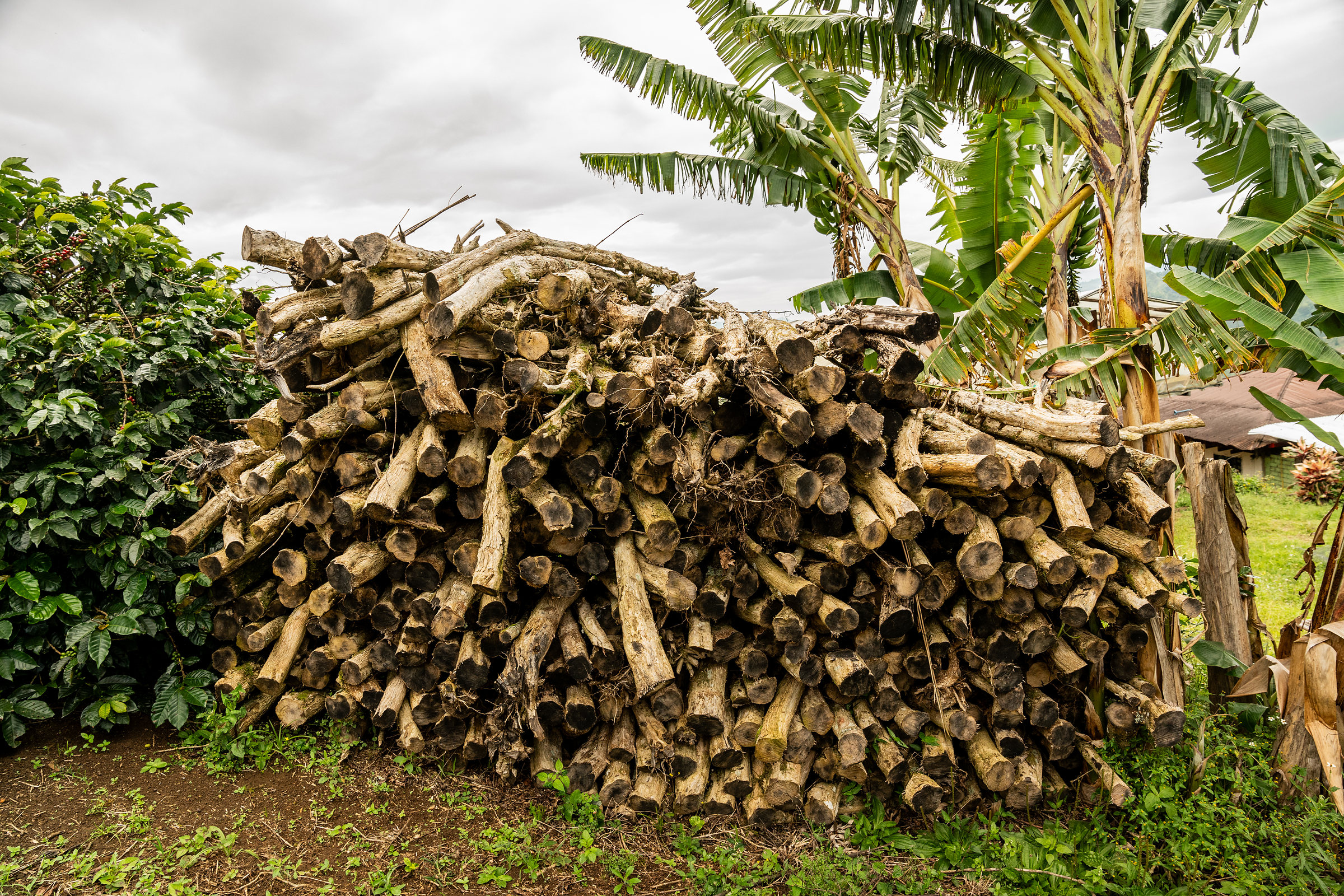
It’s waste wood
Zoca is what a coffee farm produces as part of the natural renovation process every five to seven years. It is a thick, woody pruning containing high fixed carbon, which makes it great for biochar. When zoca is placed in a kiln at 600 °C for four to six hours in a no-oxygen environment, it turns into biochar, a process called pyrolysis.
Normally, farmers burn their zoca, releasing CO₂ into the atmosphere. With pyrolysis, no emissions occur as the carbon is rerouted into forming strong aromatic carbon rings in the biochar. Biochar is then added back into the soils it came from, boosting microbial life, nutrient availability and water-holding capacity. Plus, it keeps carbon locked away for more than 1,000 years.
It’s a dense wood rich in carbon that’s already on the farm.
Natural process, no deforestation
Zoca is produced from the regular agricultural renovation cycle. No natural forests are cut and no land-use change is required. Our process is aligned with no-deforestation, no-conversion and no-exploitation principles and international safeguards, including EUDR and SBTi FLAG no-deforestation targets.
Great feedstock
Zoca is a hardwood, naturally high in fixed carbon and containing 28 % lignin. High lignin content is the key predictor of a stable biochar, placing it in the most favorable class of feedstock.
Supply surplus
Between 70,000 and 90,000 hectares of coffee are renovated each year. This means we have a large recurring supply of zoca for our process. Each hectare leaves around 25 tons of biomass.
From the zoca to the credit
Scroll: the frame changes with the step.
Farming families join
We form a cluster of 105 to 150 smallholder farming families in one municipality, and our team trains these farmers on the pyrolysis process. Farmers never pay us anything throughout this entire engagement.
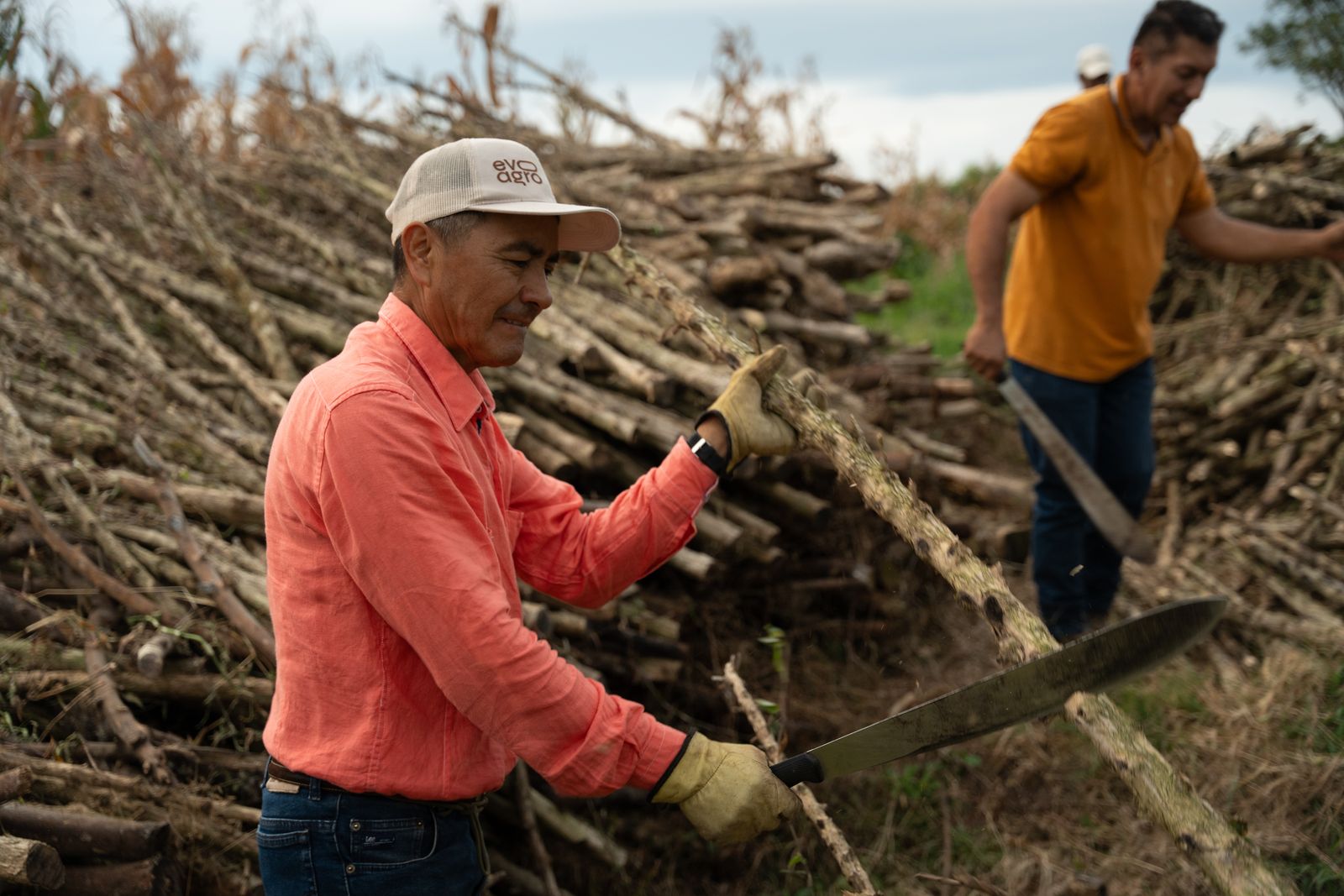
The farmer cuts and dries the zoca
Zoca is the wood that farmers prune when they renovate their coffee trees, cutting each one back so it grows again. Left alone, a tree eventually stops bearing fruit. All of our zoca comes from farms in the program, with no forest cleared and no crop diverted.
The cook starts
The families operate the cooks with the support of a Cirkular employee on site. We continuously monitor the cook parameters throughout the process.
Our farmers apply the biochar
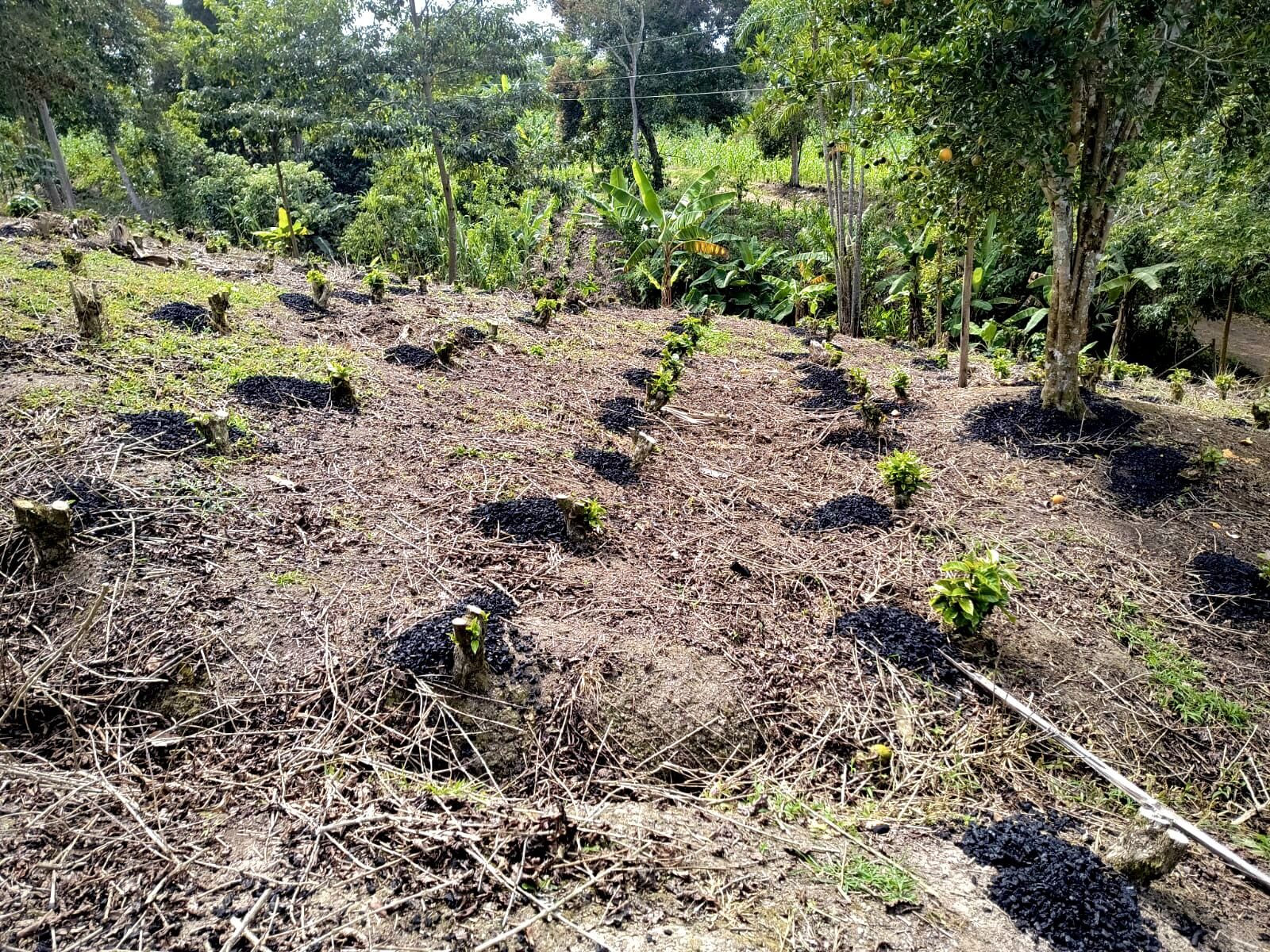
Under our supervision, our farmers apply the biochar as a soil amendment back into the soils of the same farm. It will stay in that soil for more than 1,000 years, adding to improved soil health benefits. Once the biochar has been applied, we pay the family.
We check every batch
We record each cook at source in our digital MRV system (farmer ID, batch number, temperature curve, GPS, photo set, moisture and a timestamp to the hour) and group it into a batch. An independent lab measures the biochar's quality. An accredited Validation and Verification Body (VVB), an independent auditor approved by the standard, then audits the batch.
The registry issues the credits
Only audited batches become credits. A public registry issues and lists those credits, where anyone can check them.