
What is Regen Ag?
What is regenerative farming?
Regenerative farming is a holistic farming model that follows a number of key practices, including lowering chemical inputs, maintaining living roots, maximizing plant and soil biodiversity and protecting soil structure. At Cirkular, we also like to go beyond the soil and think of it as farm resilience, which includes the livelihoods of our cafeteros and the local communities they are a part of.
Our key principles are:
Living roots
A pruned coffee tree regrows from the same roots.
Healthy soil
High water holding capacity helps improve soil health and nutrient availability.
More life
The porous structure of biochar gives microbial life a home.
Social inclusion
24.5 % of our farmers are women and 14 % are displaced families or indigenous peoples.
Paid first
Farmers are paid once the biochar is added to their soil.
The dynamic we have set out to change
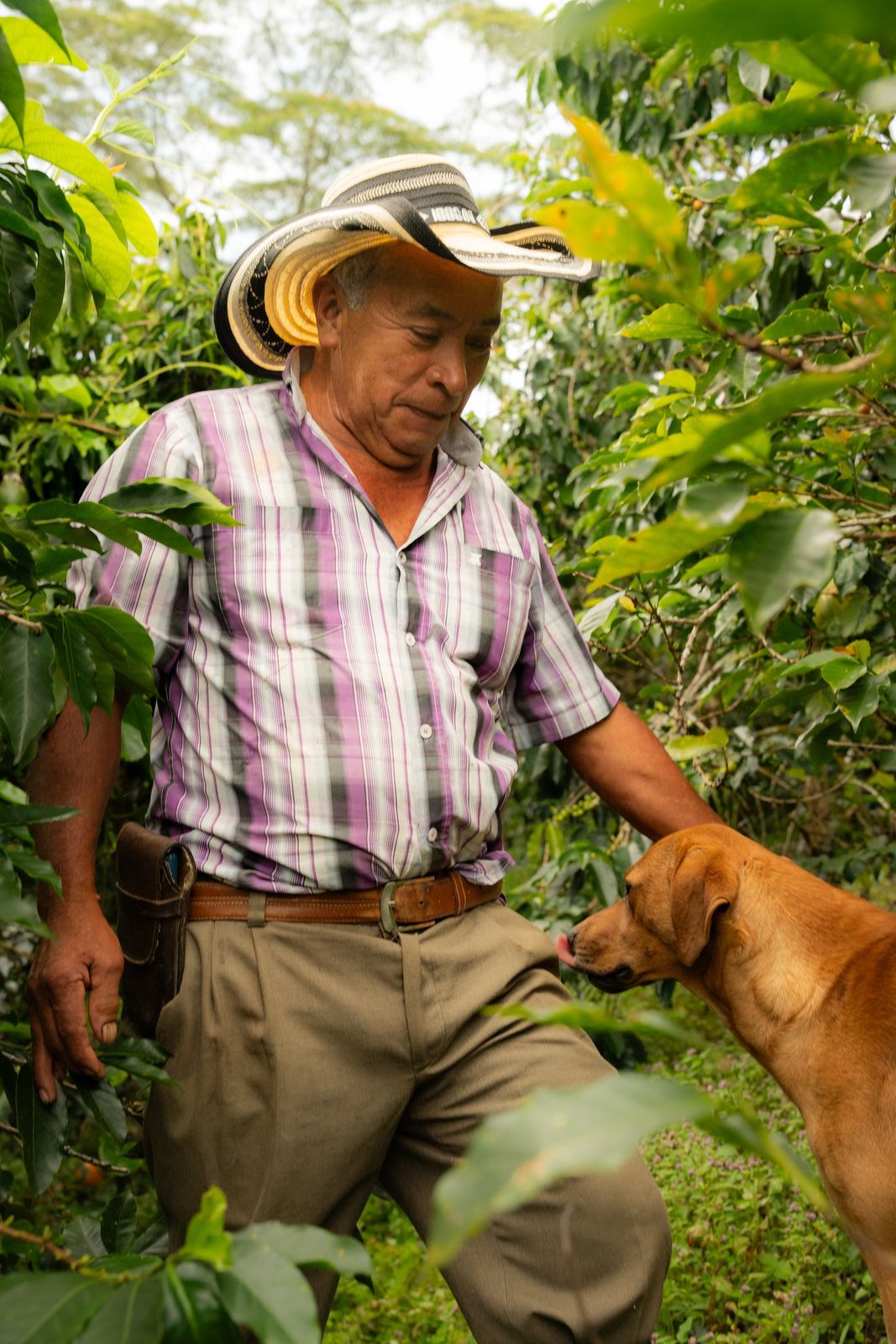
Juan lives in the coffee mountains of Colombia. Over the years, he has noticed the rains arriving a little later and the soil giving a little less with each harvest. His farm is slowly running out of places where coffee can grow, and he has few options left to make up for it.
Coffee is his only crop, and the income from each harvest has to sustain his family until the next. He has few savings, no credit that fits the coffee cycle and no season to spare. He knows that rebuilding his soil is how he stays on the land. But regeneration pays slowly, and a family living on this year’s harvest cannot risk a return that is years away.
This story is not unique to Juan and so this is the dynamic we have set out to change.
Resilient supply chains
of the world’s suitable coffee land will be gone by 2050
In a changing climate, farms with soils that hold water and nutrients can still deliver a harvest. Buyers who source from or invest in these farms gain a supply chain less exposed to the price spikes caused by poor harvests, so consumers can keep enjoying their favorite cup.
Bunn, C., Läderach, P., Ovalle Rivera, O. and Kirschke, D. (2015). A bitter cup: climate change profile of global production of Arabica and Robusta coffee. Climatic Change 129: 89–101.
- Colombia
- Tropics today
- By 2050